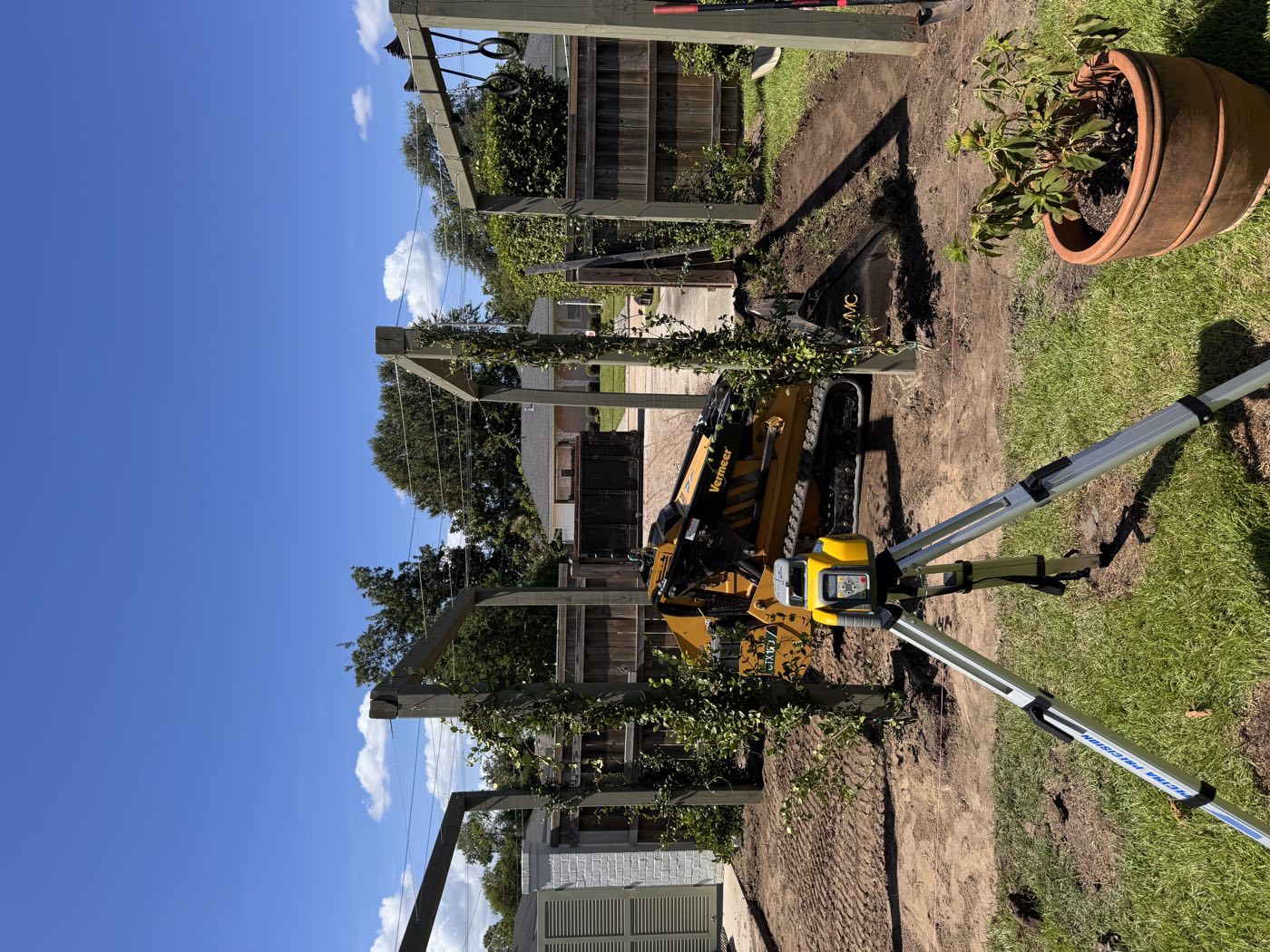
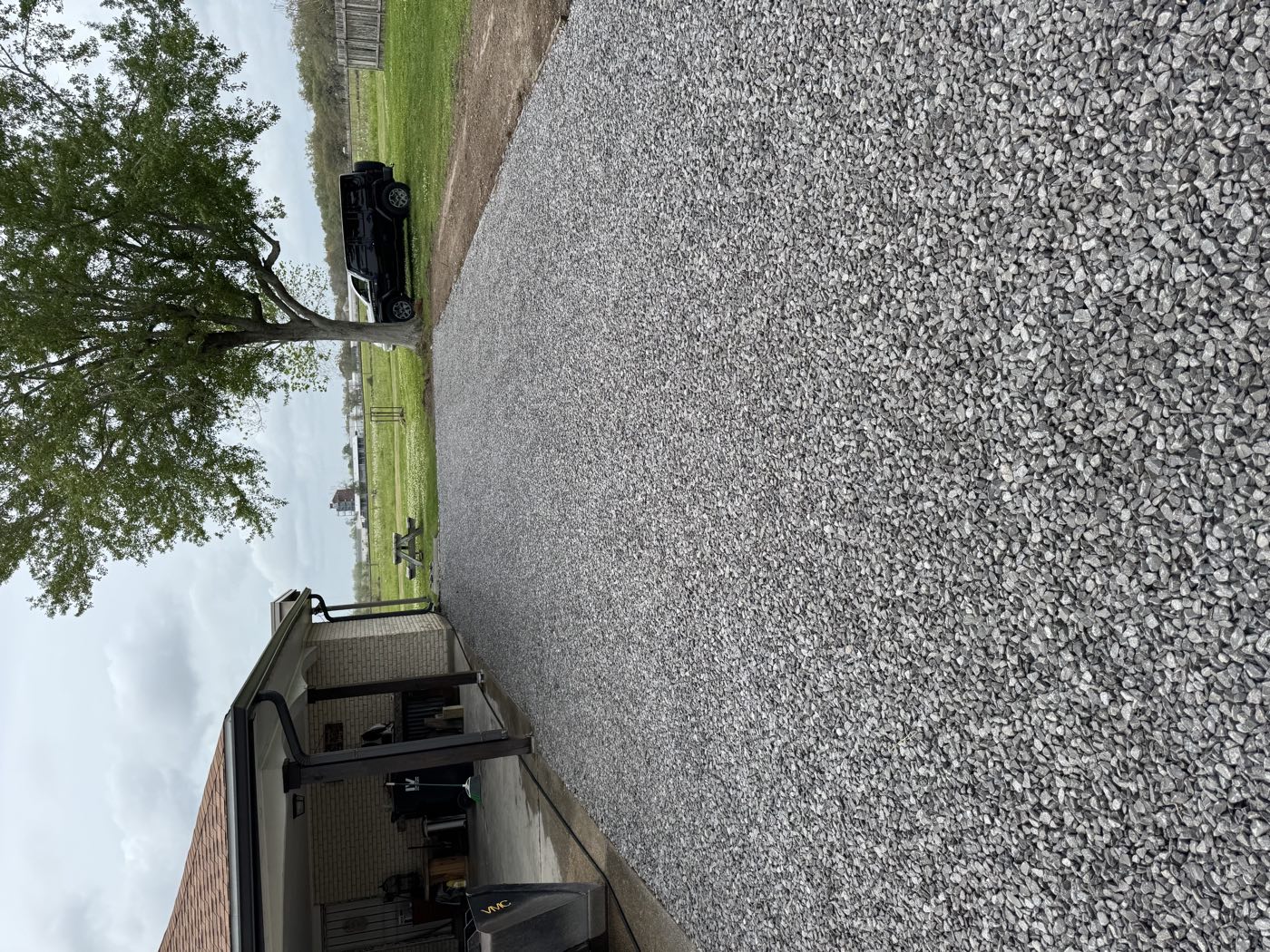
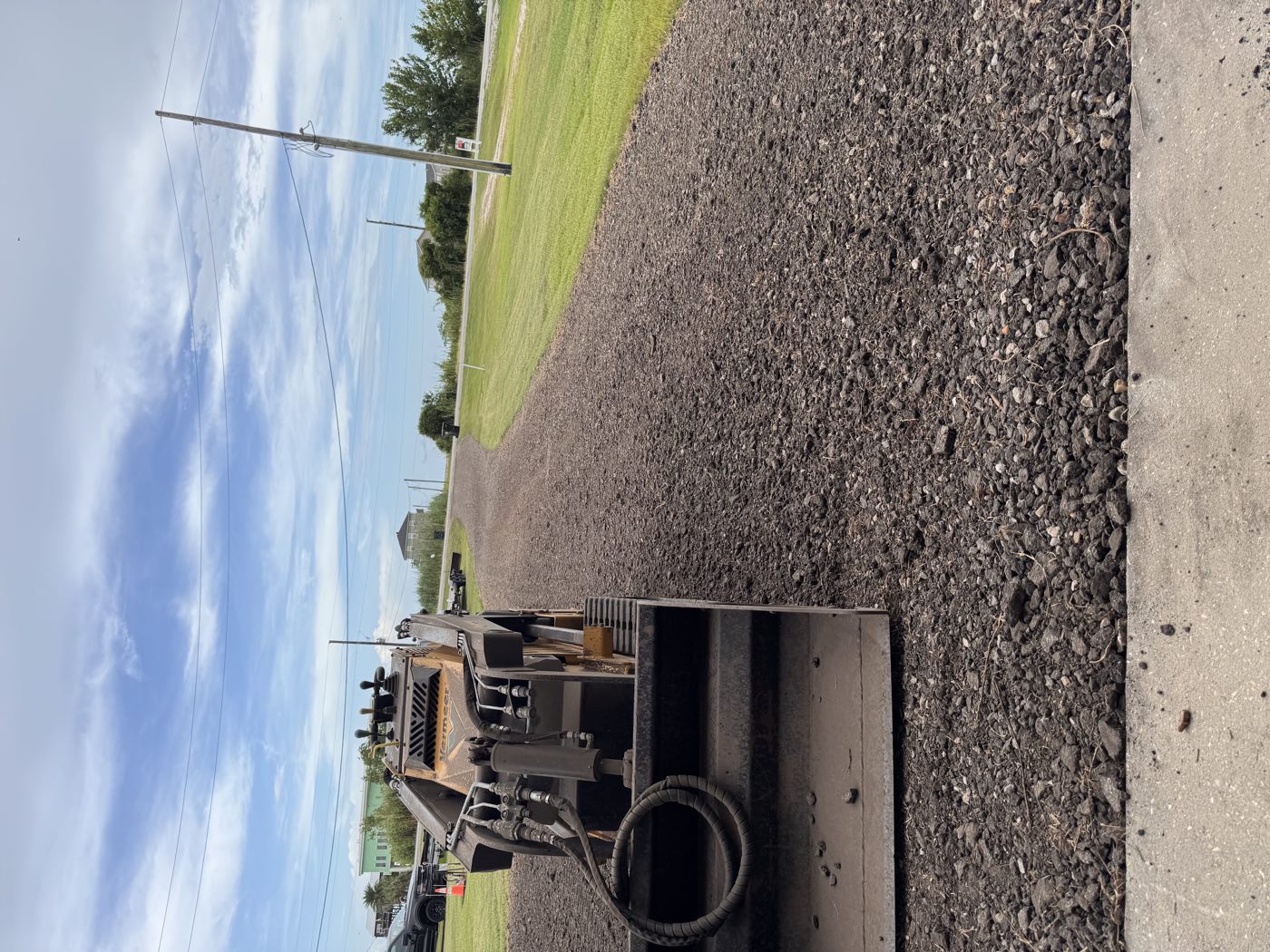
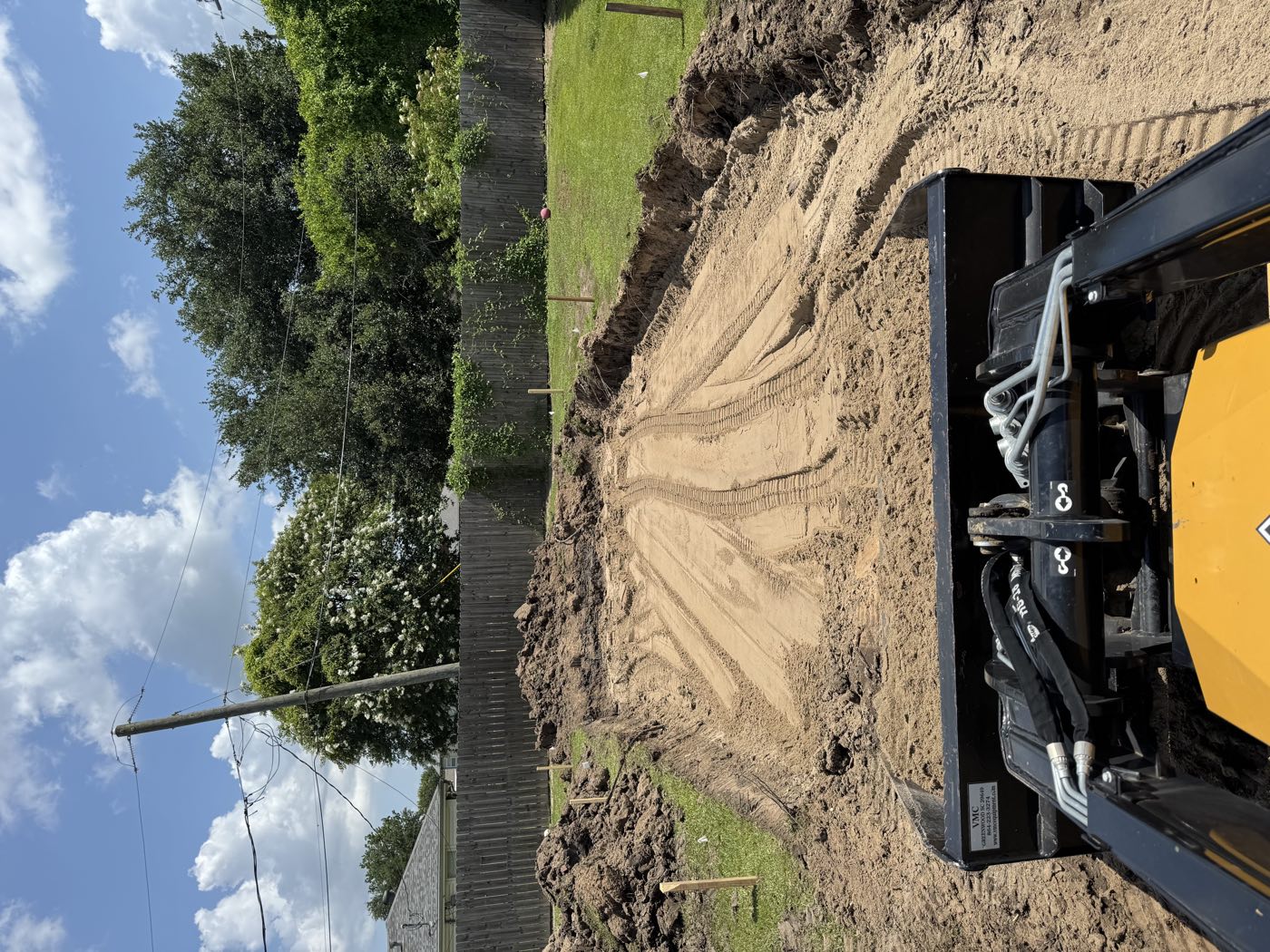
Grading in New Orleans is elevation and water, not a wide-open cut-and-fill. Orleans Parish lots sit on organic soils, historic fill, and a water table that laughs at a weekend rental skid steer. The job is usually a few tenths that decide whether a slab, a driveway, or a neighbor’s fence line takes the next rain. We treat existing brick, alley aprons, and oak roots as design constraints, not obstacles we will “work around later.”
Tight access means smaller iron, more hand work, and haul that cannot stage on the neutral ground for three days. Gentilly, Algiers, Mid-City, and the East all have different fill histories; we do not assume the dirt under a 1940s slab behaves like a greenfield pad in Slidell. If the lot needs import, we talk about what that fill actually is, because cheap dirt in this parish becomes a pumping pad.
Finish grade has to live with pumps, street drainage, and insurance conversations even when we are not pulling the permit. We set falls away from structures, keep water from sitting against plaster and brick, and leave a surface the next trade can use without drowning the alley. If FEMA or plan elevations are in play, those numbers win over a “that looks fine” eyeball.